The Unbroken Line
The Timeline
From Creation through the Apostles to the present, one faith has been kept whole. Toggle the layers to follow a single thread or overlay several — and see exactly where others departed.
To scale — every century is the same width. Scroll sideways through the centuries; tap a node for the story.
2000 BC
1500 BC
1000 BC
500 BC
AD 1
AD 500
AD 1000
AD 1500
TodayIn the beginning
The Fall
The Flood
c. 1800 BC
c. 1250 BC
c. 1000 BC
c. 8th–5th c. BC
586–538 BC
c. 5 BC
c. AD 33
c. AD 33
1st century
AD 64–313
AD 325
AD 381
AD 431
AD 451
451
AD 553
AD 680–681
AD 787
1054
1517 onward
1917–1991
The present day
Map © OpenStreetMap contributors
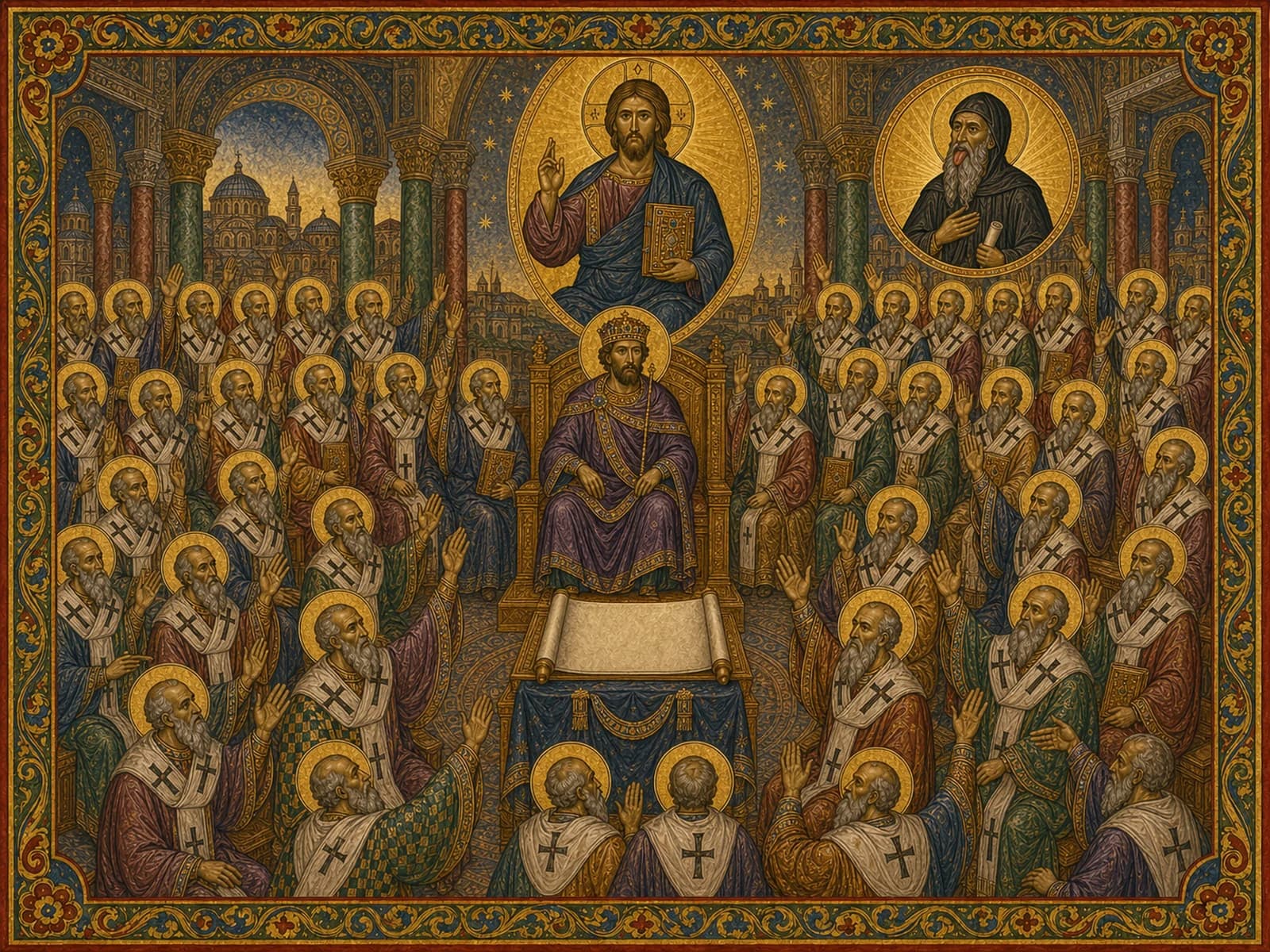
AD 680–681 · Constantinople
Third Council of Constantinople
Ecumenical CouncilsHeresies & Controversies
Confessing two natural wills in Christ, the council vindicated St. Maximus the Confessor: a complete humanity includes a human will, freely and perfectly united to the divine (Constantinople, 680–681).
Precise date