Icons
Theology in color and the incarnational argument
Orthodoxy venerates icons because the invisible God became visible in the flesh; honor given to the image passes to its prototype.
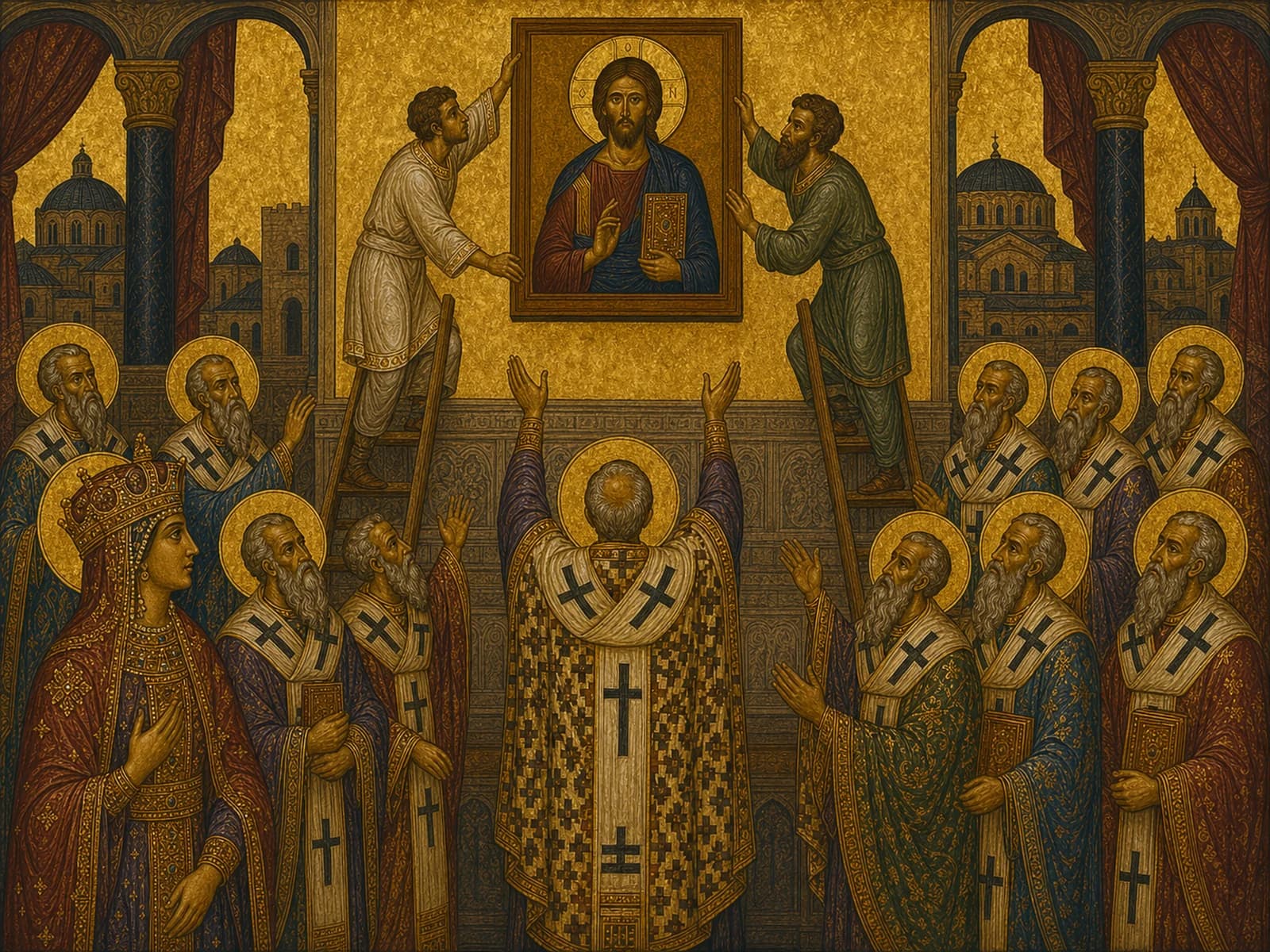
What the Church teaches
Icons are not idols. They are holy images that witness to the Incarnation, the communion of saints, and the sanctification of matter. The Church venerates icons, while worship belongs to God alone.
The biblical witness
Christ is the image of the invisible God, and the Word became flesh. Because God truly entered visible human life, the Church can depict Christ. The same incarnational logic extends to the saints as members of His glorified Body.
The councils & the Fathers
Nicaea II condemned Iconoclasm and distinguished veneration from worship. St John of Damascus argued that he did not depict the invisible God as invisible, but God made visible in the flesh.
Why it matters
Iconology matters because attacks on icons often become attacks on the Incarnation. If matter cannot bear grace or depict holy realities, the biblical claim that the Word became flesh is weakened.
Common misunderstandings
Orthodoxy does not worship wood, paint, or images. It also does not treat icons as decorative religious art only. Icons are liturgical, doctrinal witnesses that form the faithful in the Church's vision of reality.
Go deeper
Read this tract with Christology, Nicaea II, and Liturgical Theology. Icons belong to the Church's worshiping life, not to aesthetics alone.