The Person of Christ
True God, true man, one Lord Jesus Christ
Orthodoxy confesses Jesus Christ as the eternal Son and Word of God made flesh: one divine Person in two natures, divine and human, without confusion or separation.
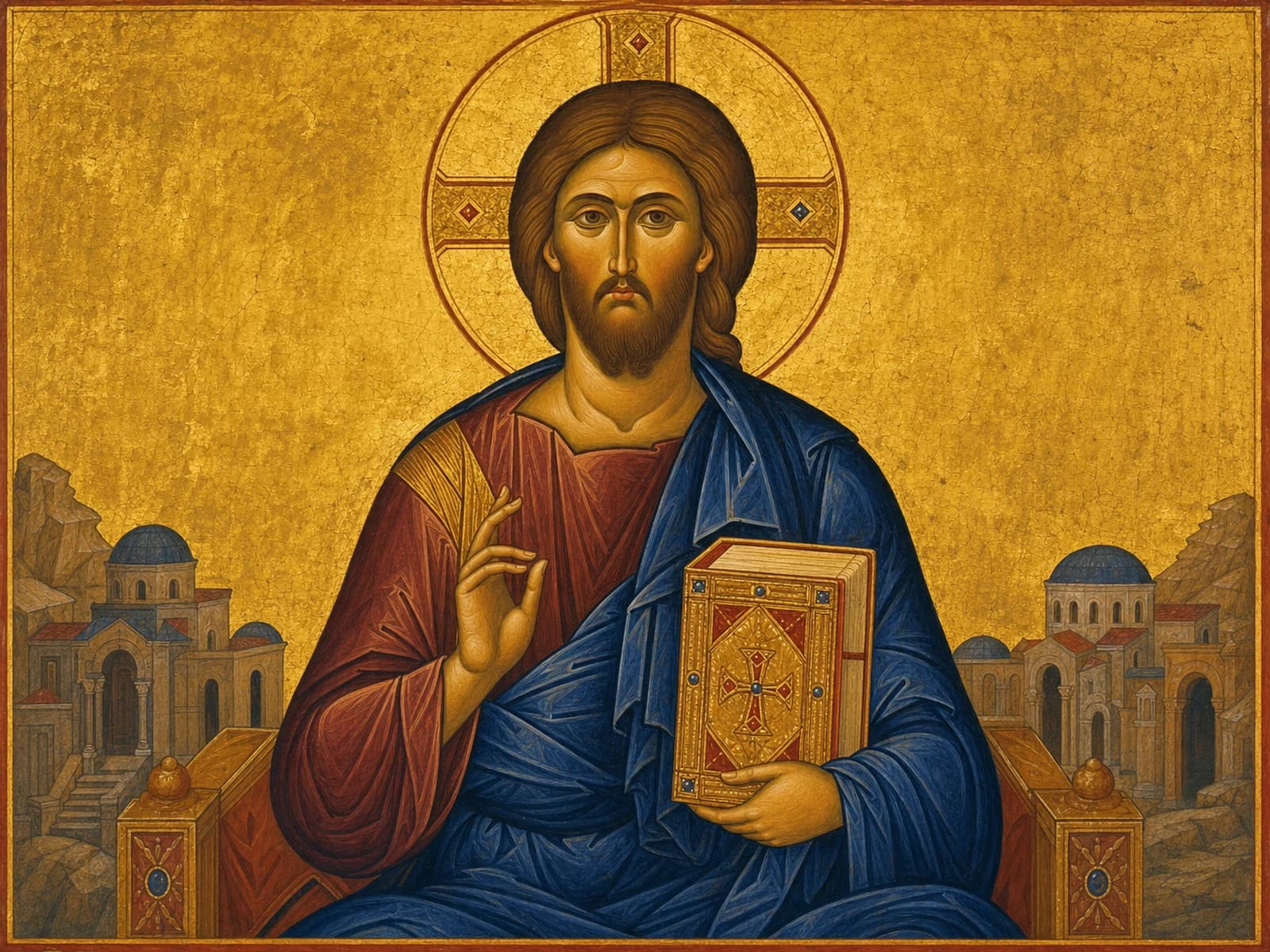
What the Church teaches
The Church confesses one Lord Jesus Christ, the eternal Son of God, who became man for us and for our salvation. He is not a prophet merely inspired by God, nor a created heavenly being, nor a moral teacher later exalted by the Church. He is God the Word made flesh.
The Orthodox confession is Chalcedonian: Christ is one person, or hypostasis, in two natures, divine and human. These natures are united without confusion, without change, without division, and without separation. The one who hungers, suffers, dies, rises, forgives sins, and receives worship is the same eternal Son.
- John 1:1-14
- Colossians 2:9
- Council of Chalcedon, Definition of Faith
The biblical witness
St John opens his Gospel by identifying the Word as God and then declaring that the Word became flesh. St Paul says that in Christ the whole fullness of deity dwells bodily. Hebrews teaches that the Son shared our flesh and blood so that through death He might destroy the power of death.
The Gospels show both realities at once. Christ sleeps in the boat, yet commands the sea. He weeps at Lazarus, yet raises him. He is born of the Virgin, yet receives the worship of the Magi. Scripture does not divide these into two subjects; it reveals the one Lord Jesus Christ.
- John 1:1-14
- Matthew 8:23-27
- John 11:35-44
- Hebrews 2:14-17
The councils & the Fathers
Nicaea confessed the Son as consubstantial with the Father against Arius. Ephesus confessed Mary as Theotokos because the child born of her is God the Word incarnate, not a separate human person beside Him. Chalcedon confessed one and the same Christ in two natures.
The Fathers saw this as a matter of salvation, not abstraction. St Athanasius taught that the Word became man so that we might be made god by grace. St Gregory the Theologian insisted that what Christ did not assume, He did not heal; therefore Christ's full humanity matters as much as His full divinity.
- Nicaea I, Creed
- Ephesus, Formula of Union
- Chalcedon, Definition of Faith
- St Athanasius, On the Incarnation 54.3
- St Gregory the Theologian, Epistle 101
Why it matters
If Christ is not truly God, He cannot unite us to God. If He is not truly man, our humanity is not healed. If He is divided into two subjects, the Gospel loses the astonishing truth that God Himself entered death to destroy it from within.
Orthodox worship, prayer, icons, feasts, and sacraments all rest on this confession. The Nativity, Theophany, Transfiguration, Cross, Resurrection, and Ascension are not isolated scenes; they are the life-giving work of the one incarnate Lord.
- 1 Corinthians 15:3-4
- Hebrews 2:14-17
Common misunderstandings
Arianism treats the Son as less than fully God. Nestorianism divides Christ in a way that endangers the unity of His person. Eutychianism or crude Monophysitism swallows His humanity into His divinity. Orthodoxy rejects all three.
The Oriental Orthodox churches should be described accurately as Miaphysite, not Eutychian Monophysite. They affirm Christ's full divinity and humanity and reject Eutyches, while rejecting Chalcedon's formula of 'in two natures.' The Orthodox case must answer their actual position, not a caricature.
- Chalcedon, Definition of Faith
- DESIGN_GUIDE.md section 6.3
Go deeper
Read the timeline entries for Nicaea I, Ephesus, Chalcedon, and the non-Chalcedonian schism together. They show how the Church guarded the same confession from several different distortions.
Later apologetics should link this tract into the Oriental Orthodox and Protestant objection libraries, especially where questions of conciliar authority, Theotokos, and the Incarnation arise.
- Timeline: nicaea-i
- Timeline: ephesus
- Timeline: chalcedon
- Timeline: non-chalcedonian-schism