Scripture & Holy Tradition
The apostolic faith written and lived
Orthodoxy receives Scripture within Holy Tradition: the apostolic life of the Church that preserves, interprets, and proclaims the biblical canon.
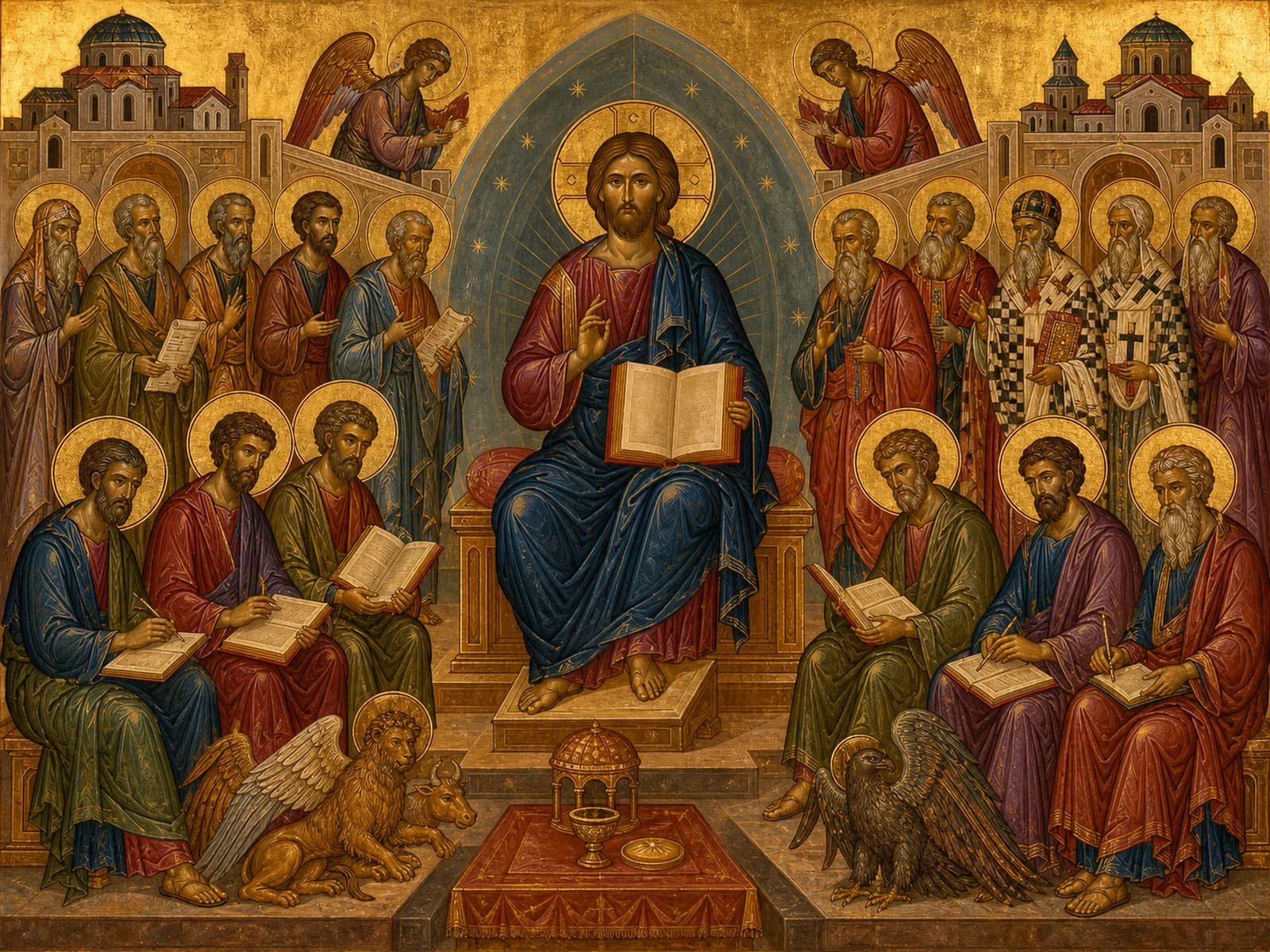
What the Church teaches
Holy Tradition is not a pile of human customs added to Scripture. It is the apostolic faith, worship, and life of the Church, within which Scripture was written, recognized, preserved, read, and interpreted.
The biblical witness
St Paul commands Christians to hold the traditions delivered by word or letter. Scripture is God-breathed and authoritative, and the Church is called the pillar and ground of the truth. These claims belong together, not against each other.
The councils & the Fathers
The Fathers appeal both to Scripture and to the Church's public apostolic rule of faith. St Irenaeus argues against private novelty by pointing to apostolic succession and the churches' received teaching. St Athanasius lists the New Testament books in his Festal Letter 39.
Why it matters
This doctrine matters because every appeal to the Bible already assumes a canon, a rule of reading, and a worshiping community. Orthodoxy does not set Scripture and Church against each other.
Common misunderstandings
Orthodoxy rejects both Scriptureless traditionalism and sola scriptura as a self-sufficient private principle. The Bible is supreme Scripture, but it is not isolated from the Church that received and proclaims it.
Go deeper
Read this tract with Ecclesiology and the Apostolic Age. The canon, Creed, councils, and liturgy are not disconnected authorities but witnesses within the one apostolic Church.