The Church
One, holy, catholic, and apostolic
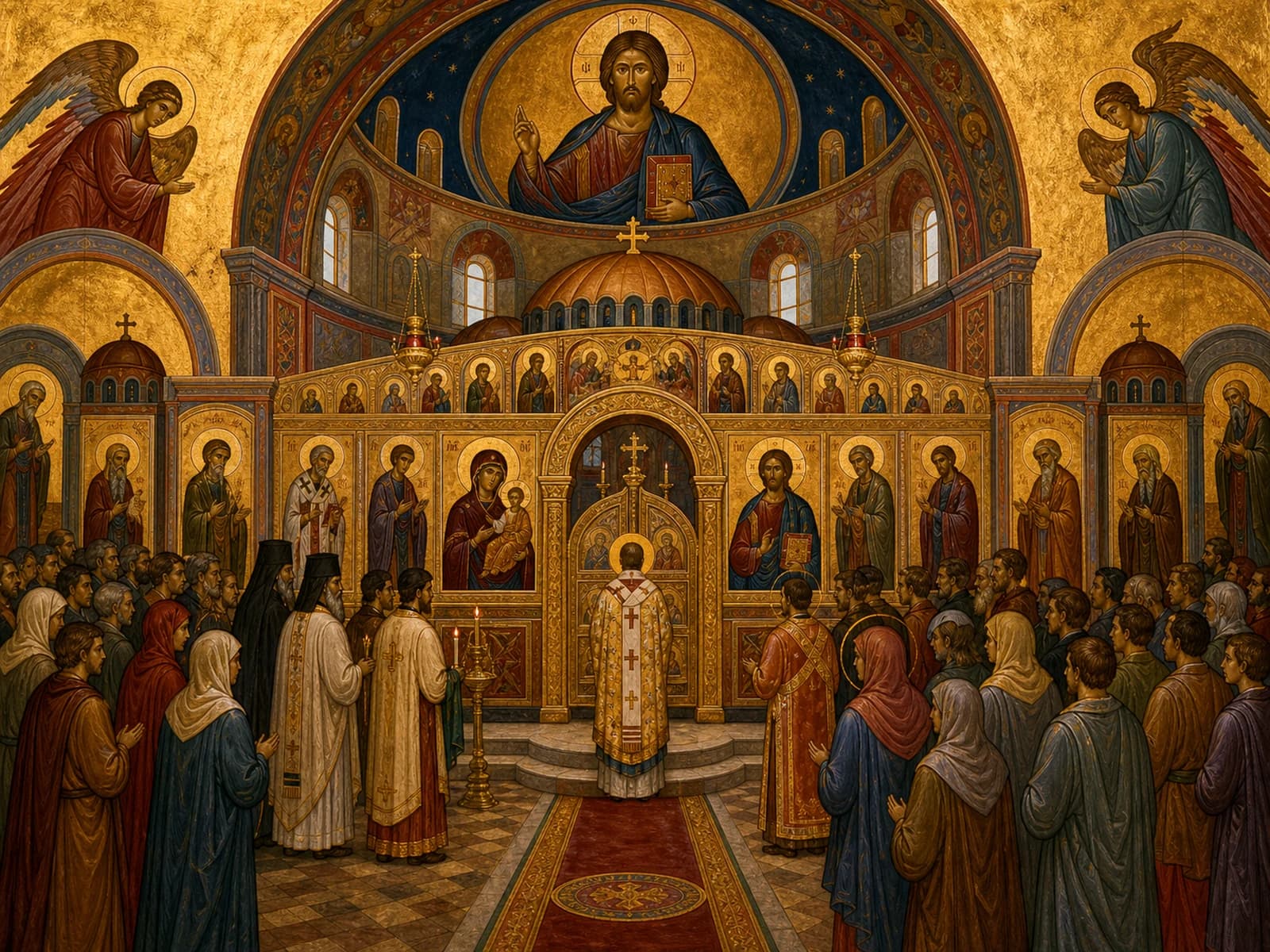
Orthodoxy understands the Church as the visible, sacramental, apostolic communion founded by Christ, enlivened by the Holy Spirit, and guarded through the bishops, councils, Eucharist, and faithful people of God.
What the Church teaches
The Church is not a voluntary religious association, an invisible idea, or a loose collection of self-interpreting communities. She is the Body of Christ, the household of God, the pillar and ground of the truth.
The Church is visible and sacramental. She remains in the apostolic faith, celebrates the Eucharist in communion, preserves apostolic succession, and receives conciliar decisions that articulate the faith once delivered.
- 1 Timothy 3:15
- Ephesians 4:4-6
- Jude 3
The biblical witness
Christ promises to build His Church and declares that the gates of Hades shall not prevail against it. The first Christians continue steadfastly in the apostles' teaching, fellowship, breaking of bread, and prayers. St Paul speaks of one body and one Spirit, one Lord, one faith, one baptism.
The New Testament does not present the Church as something invented after the Apostles. It shows a visible communion with teaching, worship, discipline, ordination, councils, and pastoral oversight.
- Matthew 16:18
- Acts 2:42
- Acts 15
- Ephesians 4:4-6
- Titus 1:5
The councils & the Fathers
The Ecumenical Councils did not create a new faith; they defended and clarified the apostolic faith. Their authority rests in the Church's life: bishops gathered in council, received by the faithful, confessing what had been believed and worshiped from the beginning.
St Ignatius of Antioch ties the Church's concrete visibility to the bishop, presbyters, deacons, and Eucharist. St Irenaeus argues from apostolic succession against the Gnostics, pointing to churches that can trace their teaching back to the Apostles.
- Acts 15
- St Ignatius of Antioch, Smyrnaeans 8
- St Irenaeus, Against Heresies 3.3.1
Why it matters
If the Church can vanish, defect, or become merely invisible, Christ's promise becomes uncertain. Orthodoxy insists that the apostolic Church remained publicly identifiable, even through persecution, empire, schism, and human sin.
Ecclesiology shapes every apologetic question. The canon of Scripture, the Creed, the councils, apostolic succession, sacraments, and the timeline's claim of continuity all depend on what the Church is.
- Matthew 16:18
- 1 Timothy 3:15
Common misunderstandings
Orthodoxy does not teach that every bishop or local church is automatically right. Bishops can err; councils can be false; members can sin. The Church's indefectibility is not institutional triumphalism but Christ's faithfulness to His Body.
Orthodoxy also rejects the idea that unity requires one bishop with universal jurisdiction over the whole Church. The ancient pattern is conciliar: primacy exists, but as primacy within the episcopate and the whole Church, not as monarchy over it.
- Acts 15
- Nicaea I, Canon 6
Go deeper
Read the Apostolic Age and Pentecost timeline entries with the seven councils. Together they show the Church as a continuous, worshiping, teaching body rather than a later reconstruction.
Later apologetics should connect this tract to objections about papal supremacy, Protestant invisible-church theories, and the authority of Ecumenical Councils.
- Timeline: pentecost
- Timeline: apostolic-age
- Timeline: great-schism
- Timeline: reformation