The Holy Mysteries
Sacramental life in Christ
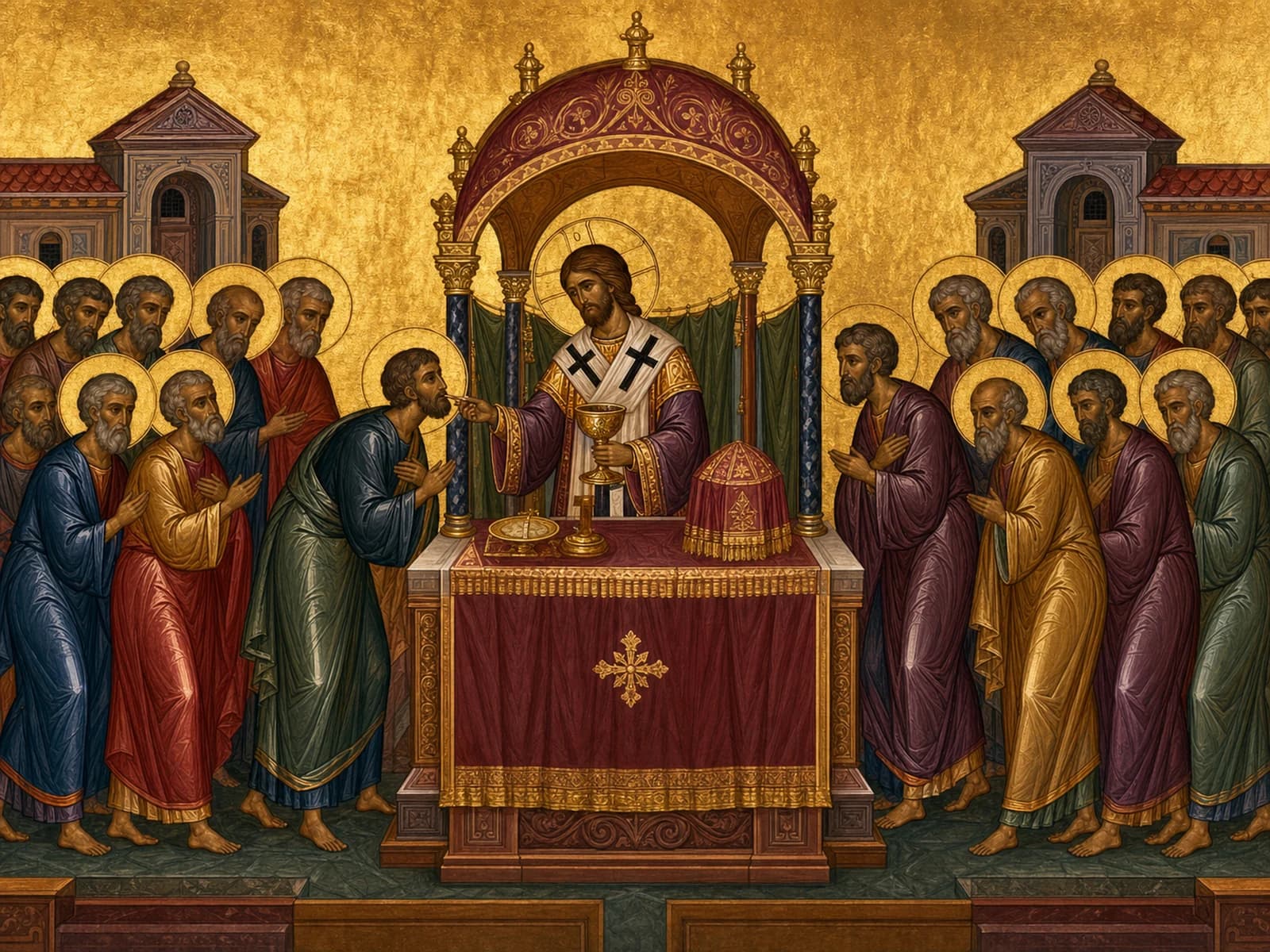
Orthodoxy teaches that the Mysteries are visible, ecclesial means by which Christ gives grace, heals, sanctifies, and unites His people to Himself.
What the Church teaches
The Mysteries are not empty symbols or private religious experiences. In baptism, chrismation, Eucharist, confession, marriage, ordination, and anointing, Christ acts in His Church through visible means.
The biblical witness
The New Testament joins faith to concrete sacramental life: baptism into Christ's death and resurrection, the laying on of hands, the Eucharistic cup and bread as communion in Christ, confession, anointing, and the one flesh mystery of marriage.
The councils & the Fathers
The Fathers speak naturally of sacramental realism. St Ignatius calls the Eucharist the flesh of Christ. St Cyril of Jerusalem instructs the newly baptized in the Mysteries as real participation, not bare memorial.
Why it matters
The sacramental life keeps salvation embodied. God saves whole persons, not abstractions. Matter is not rejected; it becomes a bearer of grace because the Word took flesh.
Common misunderstandings
Orthodoxy does not reduce the Mysteries to magic. They are received in faith, repentance, and communion with the Church. Nor does Orthodoxy treat them as optional decorations added to a mainly mental Christianity.
Go deeper
Read this tract with Soteriology, Ecclesiology, and Liturgical Theology. The Mysteries are where the Church's doctrine becomes lived participation in Christ.