The Holy Trinity
One God in three Persons
Orthodoxy worships one God: the Father, the Son, and the Holy Spirit, one in essence and undivided, yet personally distinct.
What the Church teaches
The Church confesses one God in three Persons: Father, Son, and Holy Spirit. The Father is unbegotten, the Son is begotten of the Father, and the Holy Spirit proceeds from the Father. These are not three gods, three roles, or three parts of God, but one divine essence in three hypostases.
The biblical witness
The baptismal command names Father, Son, and Holy Spirit together. St John calls the Word God, Christ promises the Spirit who proceeds from the Father, and the apostolic blessing invokes the grace of Christ, the love of God, and the communion of the Holy Spirit.
The councils & the Fathers
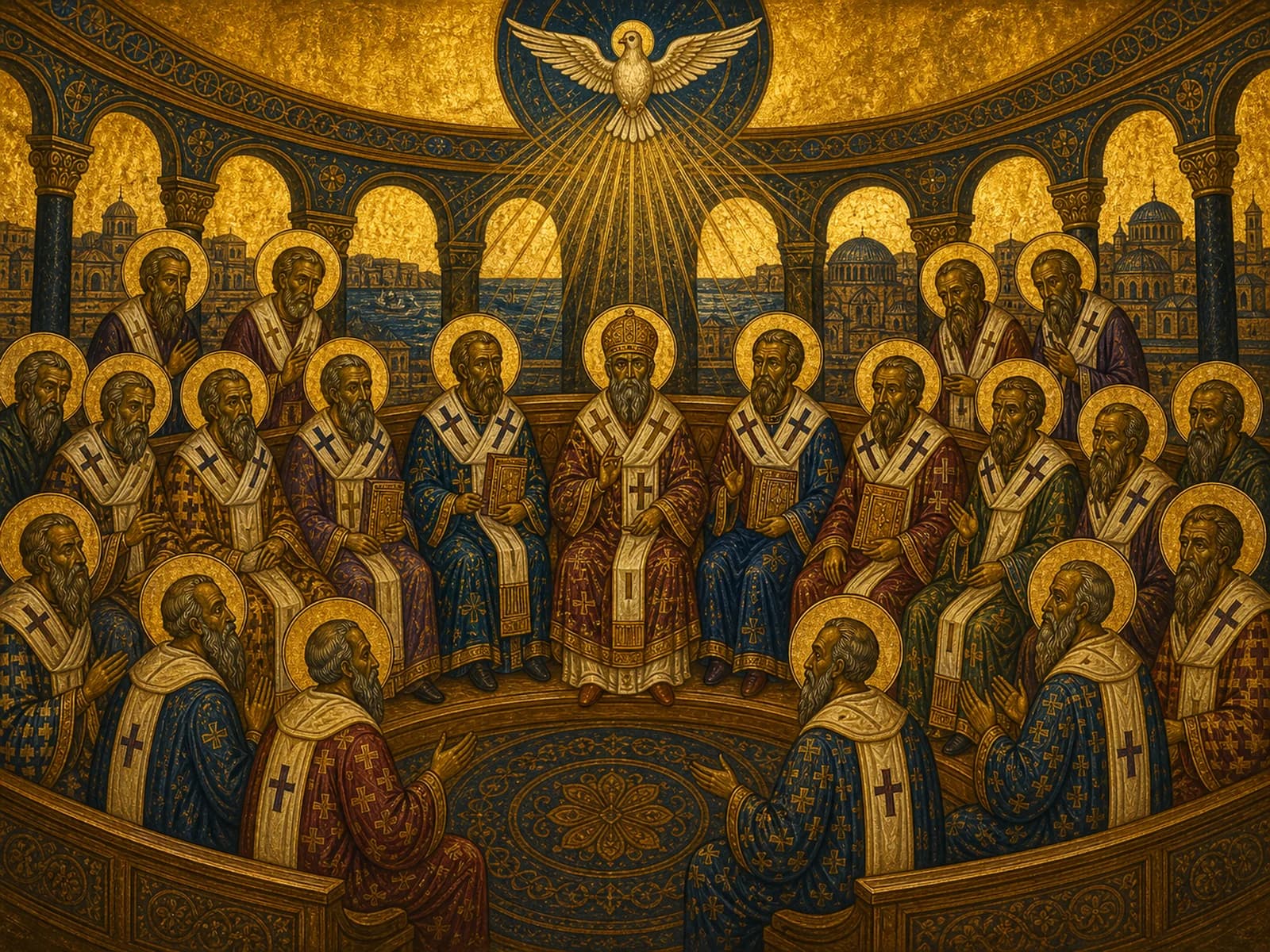
Nicaea defended the Son's full divinity against Arianism. Constantinople I confessed the Holy Spirit as Lord and Giver of Life. The Cappadocian Fathers gave the Church precise language for one essence and three Persons without collapsing either unity or distinction.
Why it matters
The doctrine of the Trinity is the grammar of Christian worship. Baptism, prayer, the Creed, the Divine Liturgy, and the sign of the Cross all confess the same living God, not an abstract monad or a set of competing powers.
Common misunderstandings
Orthodoxy rejects both modalism, which treats Father, Son, and Spirit as masks of one Person, and tritheism, which divides God into three beings. The Church also avoids explaining the Trinity as a puzzle to master; it is a revealed mystery to confess and worship.
Go deeper
Read this tract together with Christology and Pneumatology. The Son and Spirit are known within the one divine life of the Father, and the Church's disputes over Arianism and the Filioque turn on this confession.