Sin & the Ancestral Condition
Mortality, corruption, and repentance
Orthodoxy teaches that humanity inherits mortality and corruption from Adam, not personal guilt for Adam's act, and that Christ heals the ancestral wound.
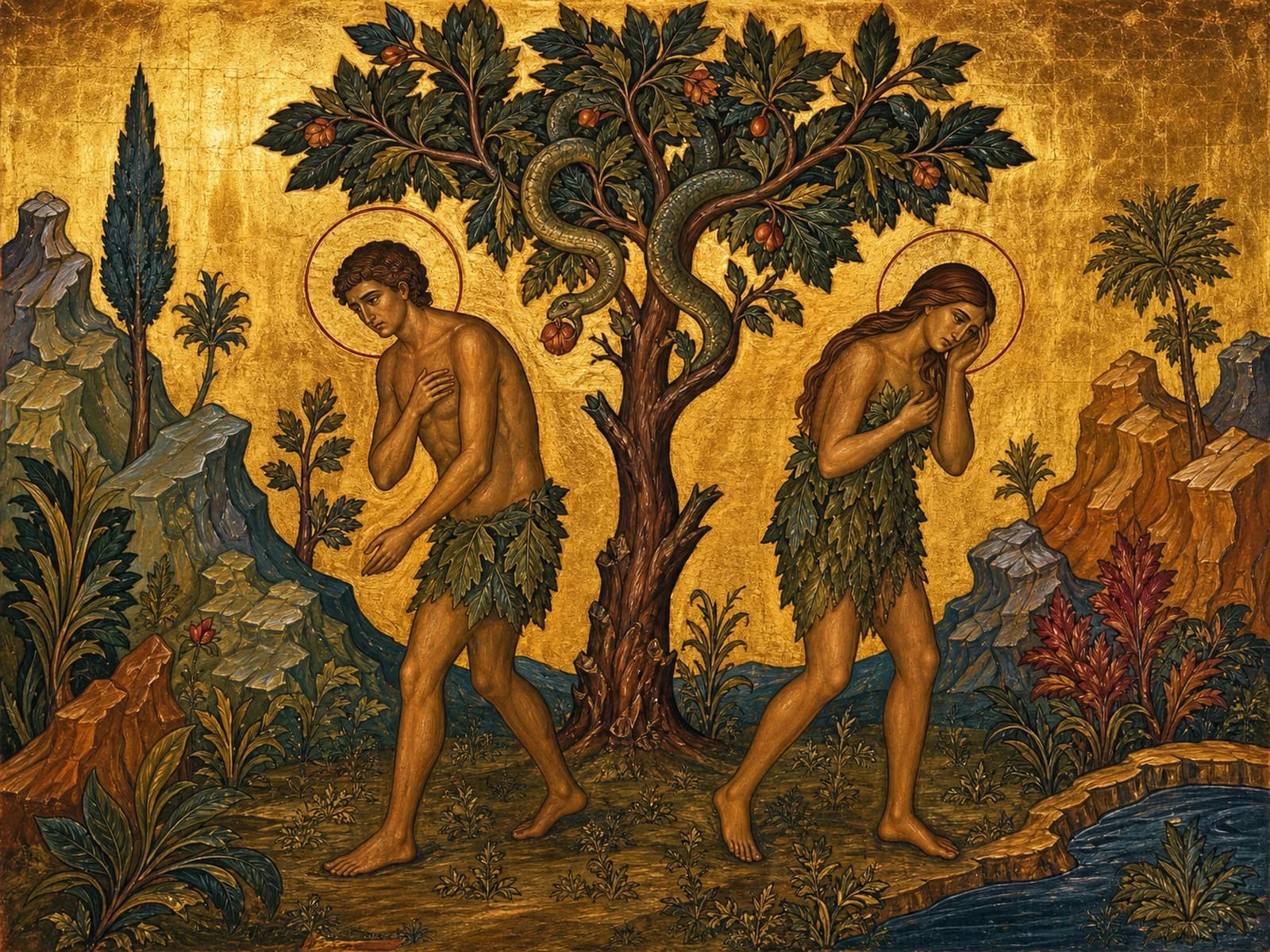
What the Church teaches
Sin is a turning away from God that wounds the human person and enslaves creation to death. The ancestral condition is inherited mortality and corruption, from which personal sins grow.
The biblical witness
Genesis shows humanity's rupture with God. St Paul teaches that death spread to all and that in Adam all die, while in Christ all shall be made alive. The biblical emphasis is death, corruption, and the need for healing in Christ.
The councils & the Fathers
The Fathers speak of Adam's fall as a wound passed through human life. The Orthodox tradition does not define inherited guilt as dogma; it emphasizes mortality, disordered desire, and the healing of the human person through Christ.
Why it matters
This matters because it shapes the Gospel. Salvation is not only pardon for guilt but liberation from death and corruption. Repentance is not self-hatred; it is return, healing, and renewed communion with God.
Common misunderstandings
Orthodoxy does not deny that all have sinned, nor does it minimize sin. It rejects the idea that infants bear Adam's personal guilt. Baptism is still necessary because all need union with Christ and deliverance from death.
Go deeper
Read this tract with Soteriology and Anthropology. The human problem and the saving work of Christ must be described together.